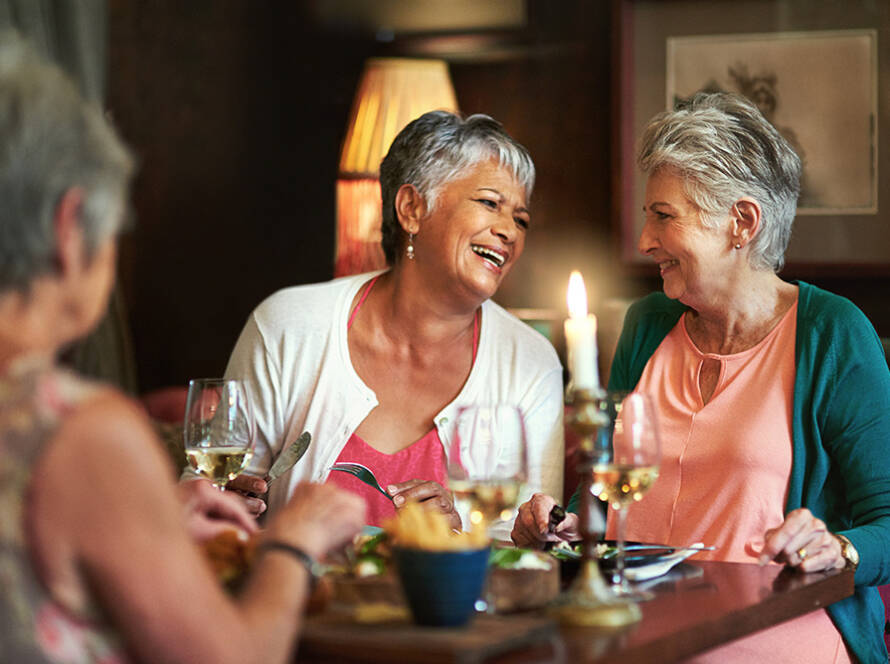
Nobody joins a book club for the book.
That is not cynicism — it is observation. Ask any woman who has been in one long enough to be honest about it, and she will tell you the same thing. The book is the excuse. The reason she keeps showing up is the women at the table.
She shows up because someone remembered what she said last month and asked how it turned out. Because the conversation went somewhere unexpected and she said something she hadn’t planned to say. Because she drove home afterward feeling lighter than she arrived, in a way she can’t quite explain to her husband or her teenagers or the friend who doesn’t come.
What she drove home with was belonging. And the book had very little to do with it.
What Book Clubs Are Actually Doing
Book clubs are one of the most durable social structures in American women’s lives — and the reason isn’t literature. It’s that they solve, quietly and reliably, the three conditions that researchers say are required for adult friendship to form.

The first is proximity. A book club puts the same people in the same room. That sounds obvious, but in adult life it is not. We are surrounded by people we never actually sit down with. A book club fixes that.
The second is repetition. It meets again next month, and the month after that. Friendship doesn’t happen in a single conversation — it accumulates. The book club provides the structure that makes accumulation possible.
The third is a context that lowers the cost of self-disclosure. This is the one people don’t think about. When a book is on the table, there is always something to talk about other than yourself. But because the book asks about loss, or marriage, or what it means to start over, you end up talking about yourself anyway — just with the safety net of the story underneath you. That is an extraordinarily effective social design, whether the women who built it knew it or not.
Nobody joins a book club for the book. The reason she keeps showing up is the women at the table.
The Adult Friendship Problem Book Clubs Solve
Making friends as an adult is genuinely hard. Not because adults are less capable of friendship, but because the structures that once produced it automatically — school, dormitories, early workplaces — have disappeared. After twenty-five, social networks begin to shrink. After forty, the research shows that most adults are actively losing close friendships faster than they are forming new ones.
Loneliness, as a result, is not a personal failure. It is a structural problem. The delivery system broke.
This is especially true for women navigating major life transitions. Friendship after divorce means starting over without the social scaffolding a marriage often provides — the couple friends, the shared calendar, the built-in belonging. A move means leaving behind the accumulated shorthand of years. Loss means the circle contracts precisely when you need it to hold.
What a book club offers in those seasons is not just company. It is a recurring structure that doesn’t require you to manufacture the reason to gather. The book is the reason. You just show up, and over time, showing up builds something.
When a Book Club Becomes a Circle
There is a difference between a book club and a circle, and most women who have been in one long enough know exactly when the shift happened.
It happened when someone in the group went through something hard, and the group showed up. Not just with a text — with a meal, a phone call, a presence. When the gathering stopped being about whether anyone had actually finished the book and started being about the fact that these particular women, in this particular room, had accumulated enough shared history to actually know each other.
That shift is not accidental. It is the product of time, repetition, and the particular kind of vulnerability that shared stories — fictional or otherwise — create.
A book club becomes a circle when the women in it stop being people who meet monthly and start being people who belong to each other.
That is what belonging looks like, built from the inside out. Not found. Not stumbled into. Built, one gathering at a time.
What the Research Says About Circles and Health
The benefits of what a book club can build extend well beyond warmth and good conversation. Social connection — the kind that is regular, reciprocal, and sustained over time — is one of the most powerful protective factors in human health.
Women with strong social circles show lower rates of depression, better cardiovascular outcomes, stronger immune function, and longer lives. The Surgeon General’s 2023 advisory on loneliness noted that social isolation carries health risks comparable to smoking fifteen cigarettes a day. The antidote to that isolation isn’t a single friendship. It’s a circle — a structure with enough members, enough rhythm, and enough history to hold.
A book club, maintained over years, can become exactly that structure. Most women who have one don’t think of it as a health intervention. But the research suggests that in some very real sense, it is.
The Book Club as a Gateway
Here is something worth saying plainly: the book club model works, and it works especially well for women who find the direct pursuit of friendship uncomfortable.
There is something about the book on the table that makes vulnerability easier. You are not saying I need friends — you are saying I want to talk about this story. The friendship forms in the space between. For women who struggle with the exposure of outright reaching out, a book club provides a structure that makes connection feel less like a risk and more like a side effect.
This is why it has survived as a social form for decades, long after many other gathering rituals have faded. It is low-stakes enough to say yes to and rich enough to keep coming back for.
And for many women, it is the first circle they have ever intentionally built.
Intertwined: Friendships That Shape a Life
If what you are looking for is not just a gathering structure but an honest reckoning with adult friendship — what makes it hard, what makes it hold, and what it costs us when we don’t prioritize it — Intertwined: Friendships That Shape a Life was written for you.
It is part memoir, part research, part field guide. It is built around real stories — the preschool pickup line friendship that flew across the country when everything fell apart; the parking garage conversation that became five years of slow-built trust; the circles formed in every season of a life, after divorce, after loss, after starting over.
Intertwined is a friendship book for the woman who is done waiting for connection to find her and ready to understand what it actually takes to build it.
It would make an extraordinary book club selection. Not because the discussion questions are tidy — but because the conversation it starts is one most women have been needing to have for years.
Start Where You Are
You don’t have to overhaul your social life to change it. You don’t have to be extroverted, well-connected, or living somewhere with a built-in community.
You have to start somewhere small. A book. A table. Four women. Next month.
The circle begins with the first gathering. And the first gathering begins with one invitation.
Rhonda Krill is the founder of DinnerTwine, a platform for hosting and managing dinner clubs, and the author of Intertwined: Friendships That Shape a Life (Princewood Press, 2026).